
Year: 2024
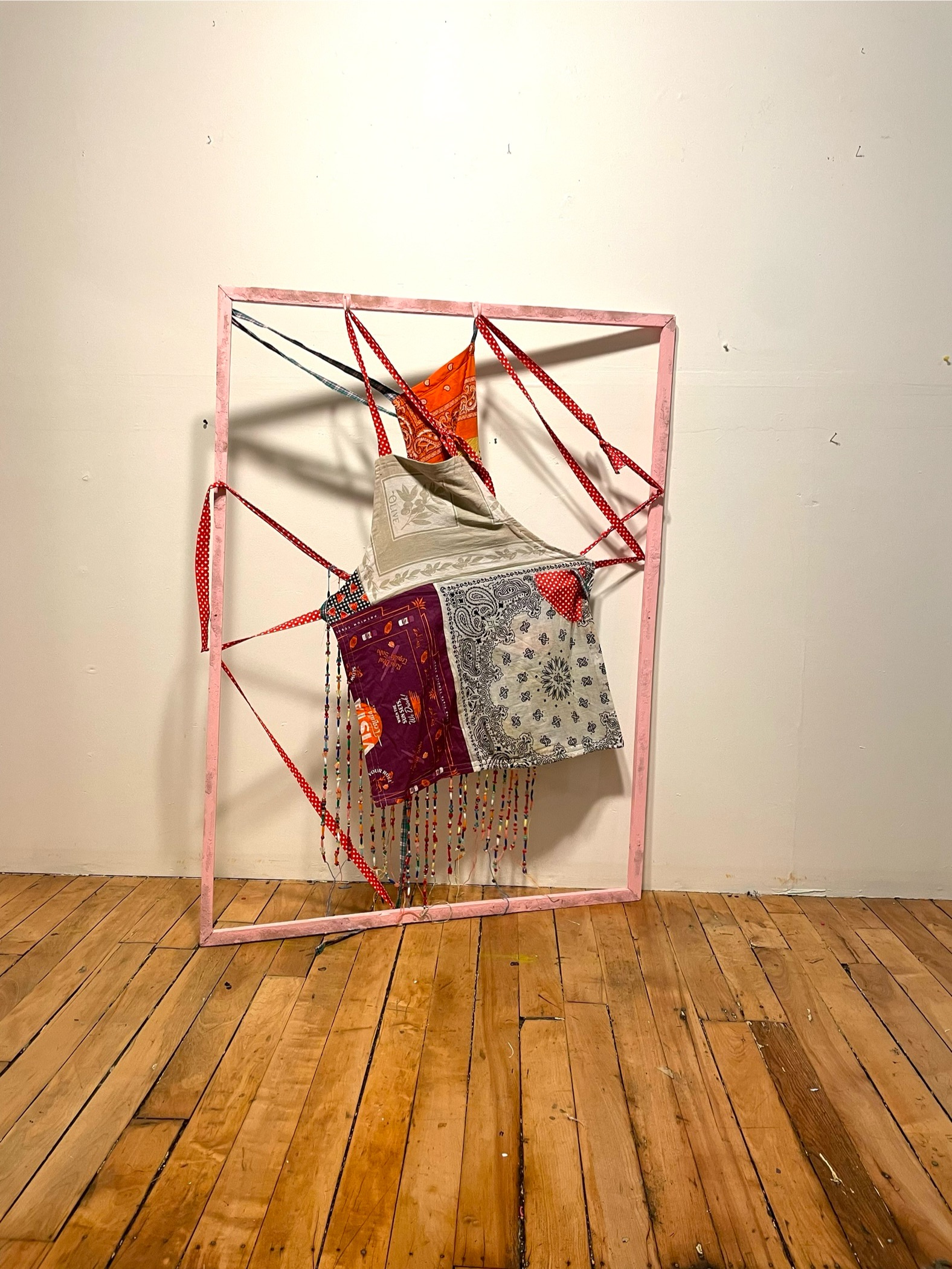
Medium: Wooden frame, metal fixtures, cloth, bead, string
Dimensions: 54” x 40” (Intended to be hung at an angle that allows for both sides to be seen and interacted.)
Price: $25,000 (After tax average take home pay for a cook in the US (Zip Recruiter).)
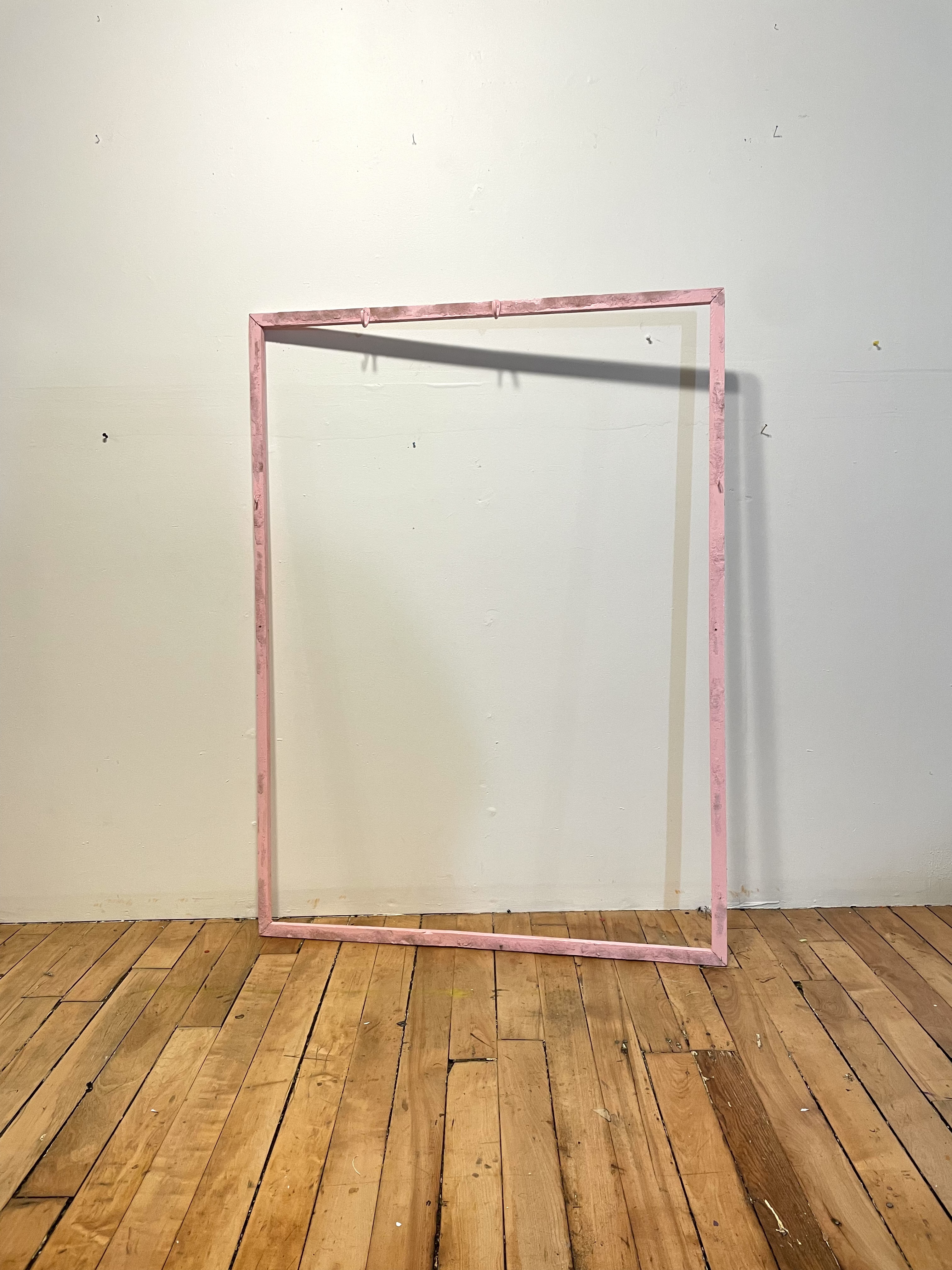
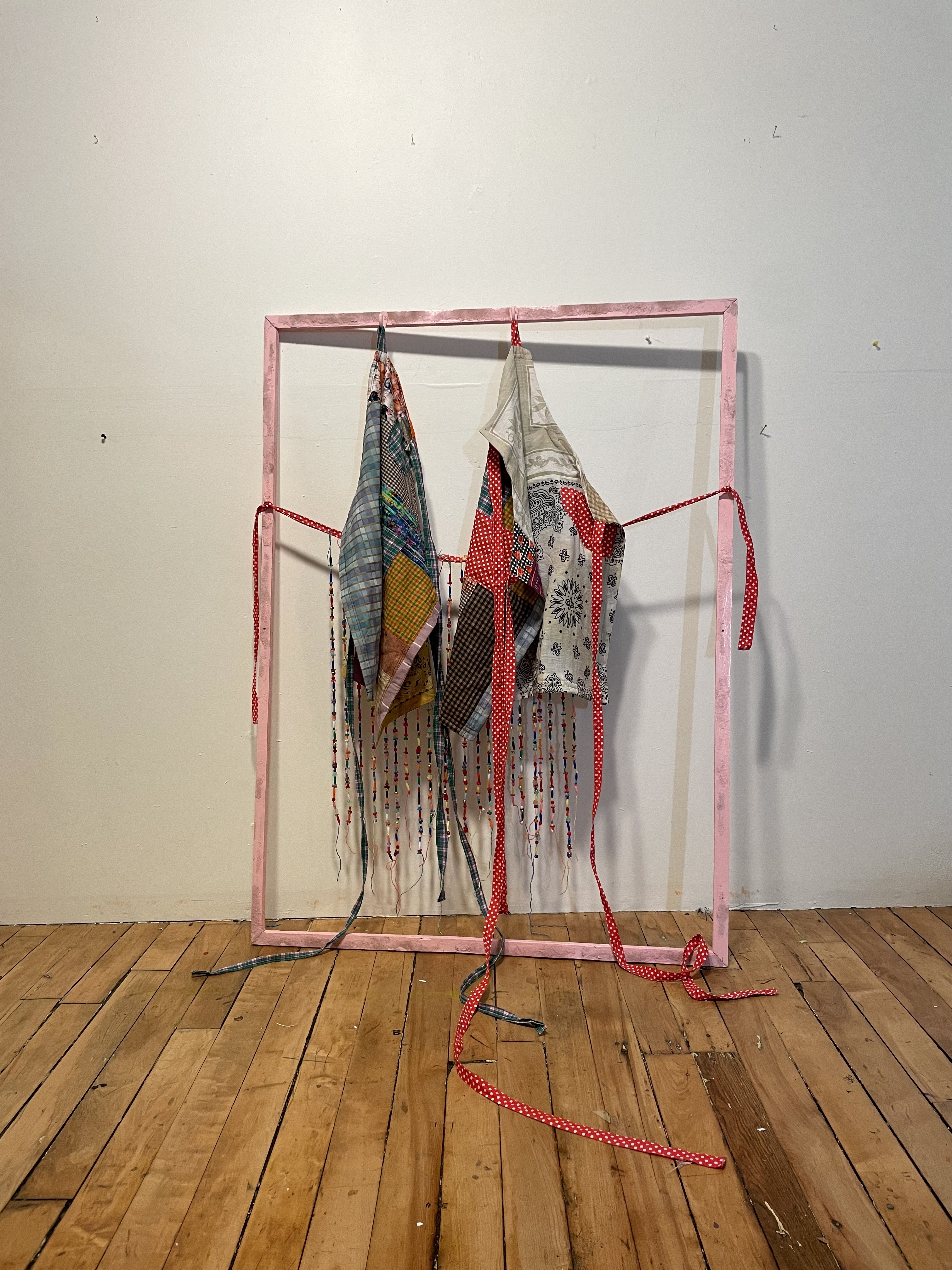
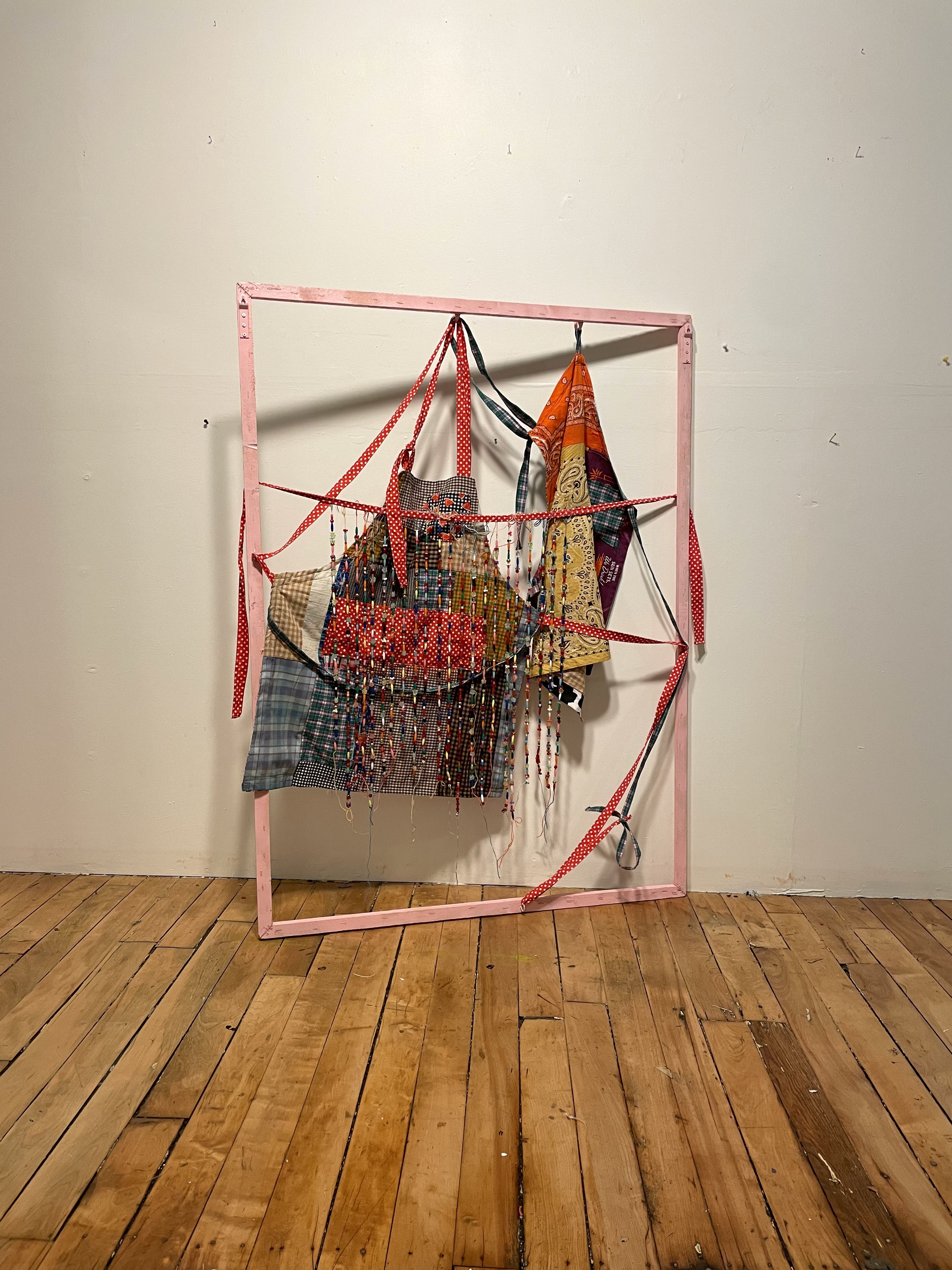
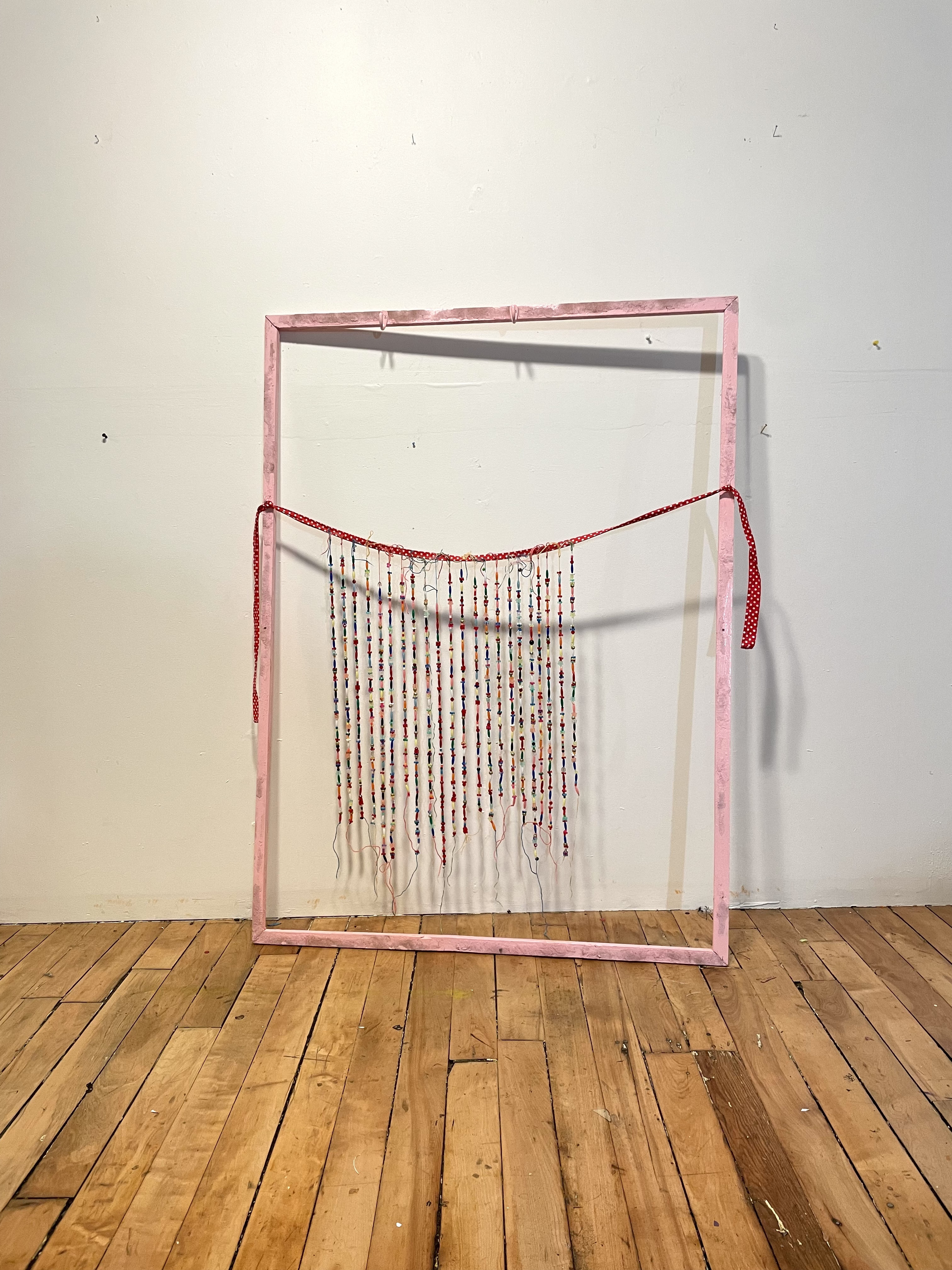
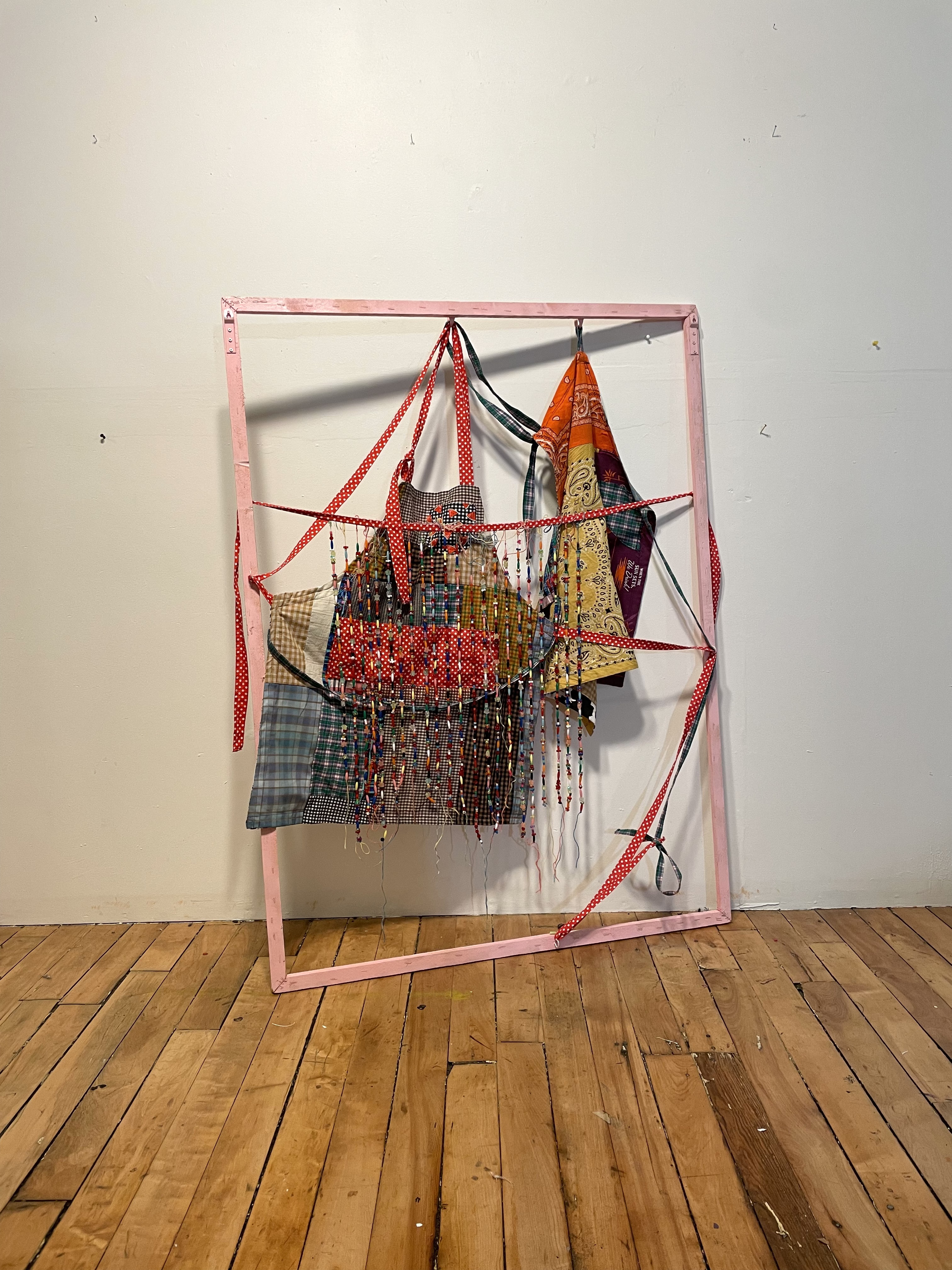
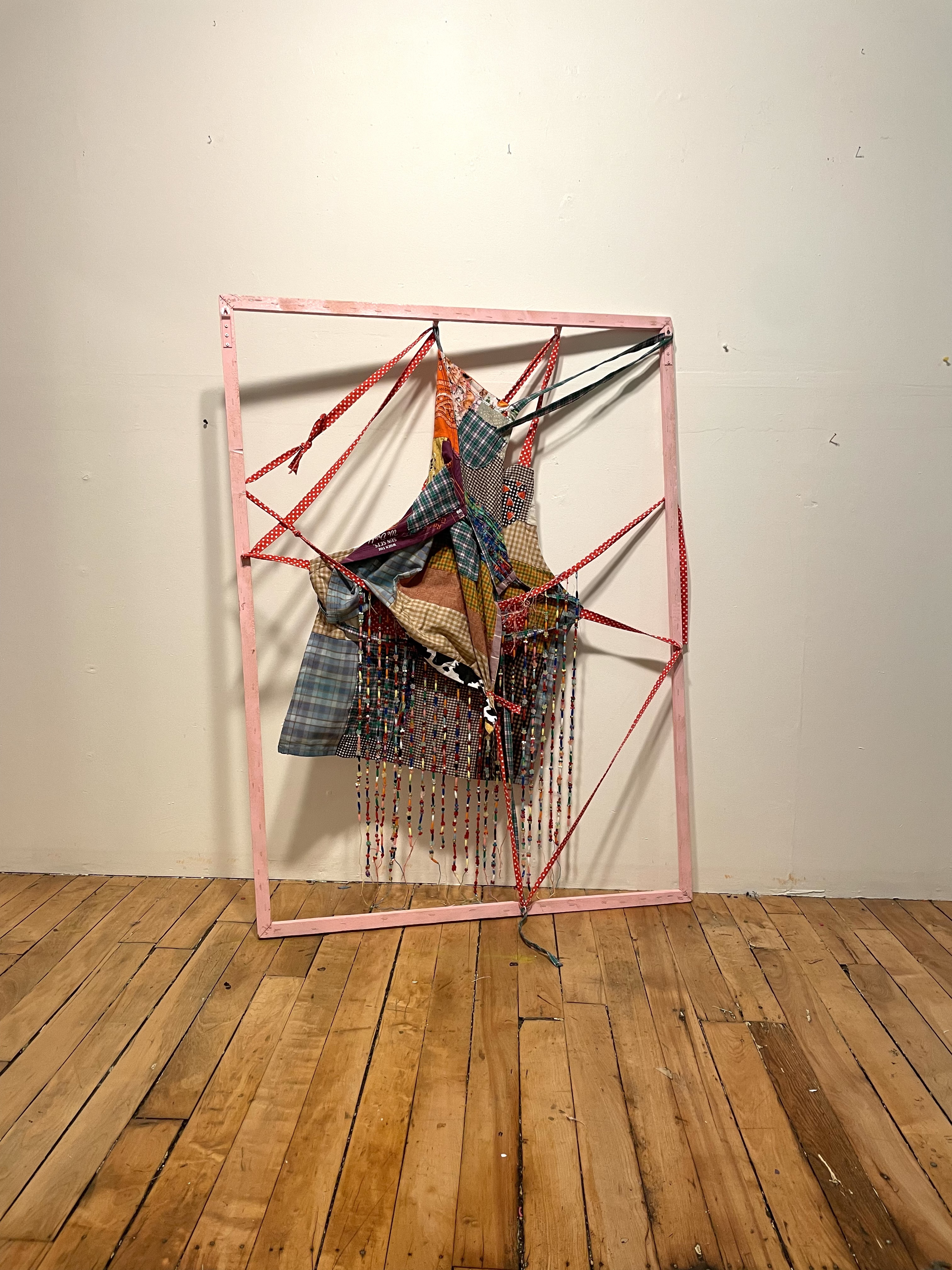
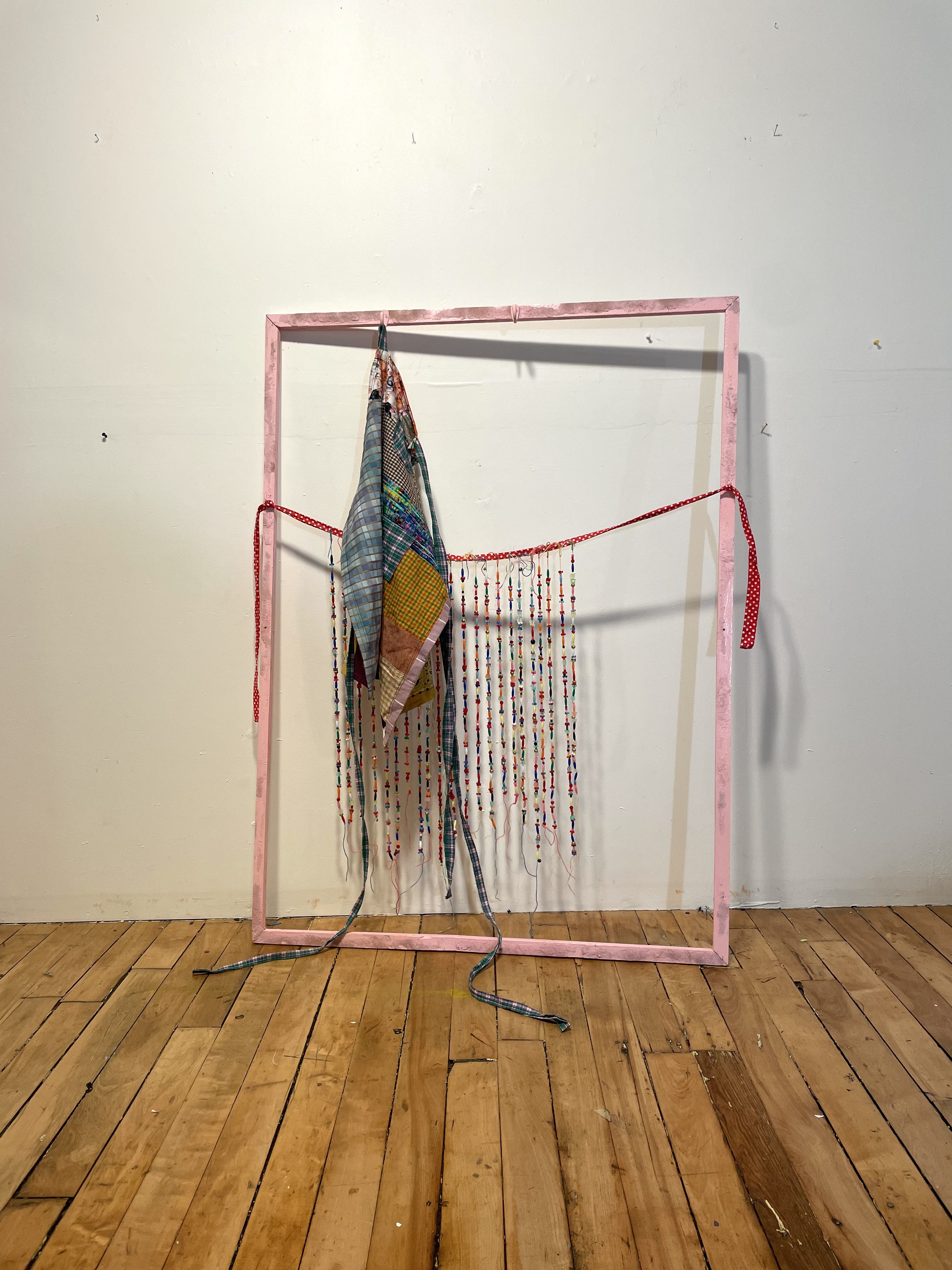
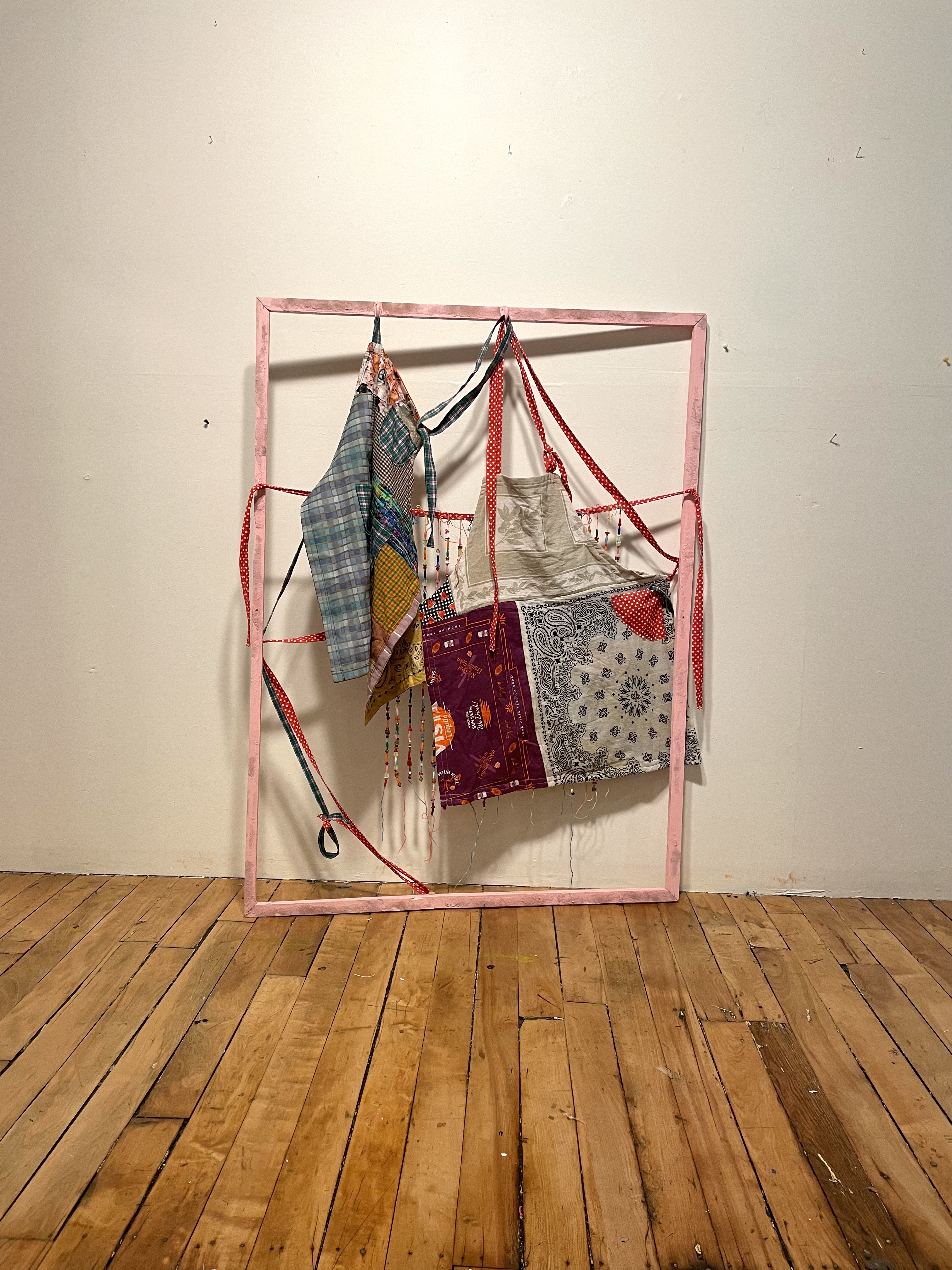
Artists Statement: I can begin my artist’s statement ~5 years ago, or ~20,000 years ago. Either way, I intend to turn you around, and to turn the gaze from that which is being eaten to those who cook it. The preparation of food is deeply gendered; it has been women’s work for nearly all of our recorded history and is a technology with a coevolutionary partner: the threading of cloth. 5 years ago I came across Elizabeth Wayland Barber’s Women’s Work: The First 20,000 Years, which suggests that string aprons, ties fringed with strings, are some of the first records of clothing, worn by carved Venus figurines occurring as early as 20,000 BCE. In Greek myths, the “girdle of Aphrodite” is the archetype of women’s sexual power. Descendants of these string aprons continue to be used today as signifiers of female erotic capacity.
Food as erotic, food as necessity. Put on the apron. My work is also influenced by Rebecca May Johnson’s recent book, Small Fires: An Epic in the Kitchen. She begins by putting on her apron. She notes her preference for tightly binding the ties. The constraint of the apron’s tension serves to tether her to her body– a chosen exercise of constraint: apron as erotic. In Small Fires, Johnson engages with the methodology of recipe. She works to resist the flattening of cooking food by pointing out the embodied, lived experience stored in recipes. The sensory experience of preparing food is integral to eating it. Recipe is embodied, food is cooked. If you must eat with your eyes, eat the gestures of the cook as she masterfully conducts the technology of the kitchen. And see how the flattening and silencing of unpaid labor/domestic cooking (“they say it is love,” Wages Against Housework, Silvia Federici), runs directly in contrast to the food industry, which is ripe with male domination.
I made my first apron for a dearest friend who works as a line cook at a nearby restaurant. She wears it at work, so it now smells like flour, pizza dough and tomato sauce (you can determine which of the three aprons included in this work is hers by eating with your nose). I made it using scraps of old fabrics, embracing Sapphic fragmentation and queer “esthetic of survival” (Fray: Art and Textile Politics, Julia Bryan-Wilson). I am laboriously aware that my practice of creativity is intimately tied to giving. This interdependence, this reliance on intense female friendship and love for generative power, belongs at Adrienne Rich and Audre Lorde’s spiritual kitchen table and within Adrienne Rich’s “lesbian continuum.” Resisting compulsory heteronormative, individualistic, industrial productivity is both a vulnerability and a radical acceptance of my own erotic power, my own capacity for more pleasure, more joy. The first function of the erotic according to Audre Lorde “is in providing the power which comes from sharing deeply any pursuit with another person” (“Uses of the Erotic: Erotic as Power”). If you must eat with your eyes, eat eye contact with another.
The viewer is invited to engage with this work. The aprons can be tied together. The aprons can be tied to themselves. The aprons can be turned around, stretched taut or draped with slack. The aprons can be put on and taken off, differently, and again.
 EMC
EMC 